Recruitment Agencies: Don't Miss Hiring Signals in Your CRM
Recruitment agencies overlook hiring signals buried in their CRM data. Read patterns correctly to predict warming client relationships within 20-30 days.

Predictive analytics gets discussed as though it requires a six-figure data science budget and months of implementation. For most recruitment agencies, that framing causes them to overlook intelligence they already own. Your CRM contains years of client behaviour, engagement patterns, and deal progression data that, when read correctly, predicts which relationships are warming up and which are going cold. The agencies that treat this data as a forward-looking tool, rather than a historical record, operate their business development with a structural advantage over those that do not.

What Predictive Analytics Actually Means for Recruitment BD
Predictive analytics is the practice of using historical data and pattern recognition to forecast future outcomes, rather than simply reporting on what has already happened. In a recruitment agency context, this means analysing past client interactions, deal timelines, and engagement behaviour to identify which accounts are most likely to place a brief, re-engage, or go quiet before those outcomes become obvious.
The distinction from standard reporting matters. Most agencies track lagging indicators: placements made, revenue per client, days to fill. These tell you what happened. Predictive analytics tells you what is about to happen. A client who used to respond to your emails within a few hours but now takes two days is sending a signal. A contact who just moved into a new role is sending a different kind of signal entirely. Neither shows up in a standard CRM report, but both are predictive.
The timing argument is compelling. According to research cited by Nrev, the same outreach message earns a 3 percent reply rate from a cold list but a 15 to 25 percent reply rate when it reaches an account at the moment they are actively researching a solution. Your CRM data is the mechanism for identifying which of your existing clients is at that moment right now.
The BD Signals Already Sitting in Your CRM Data
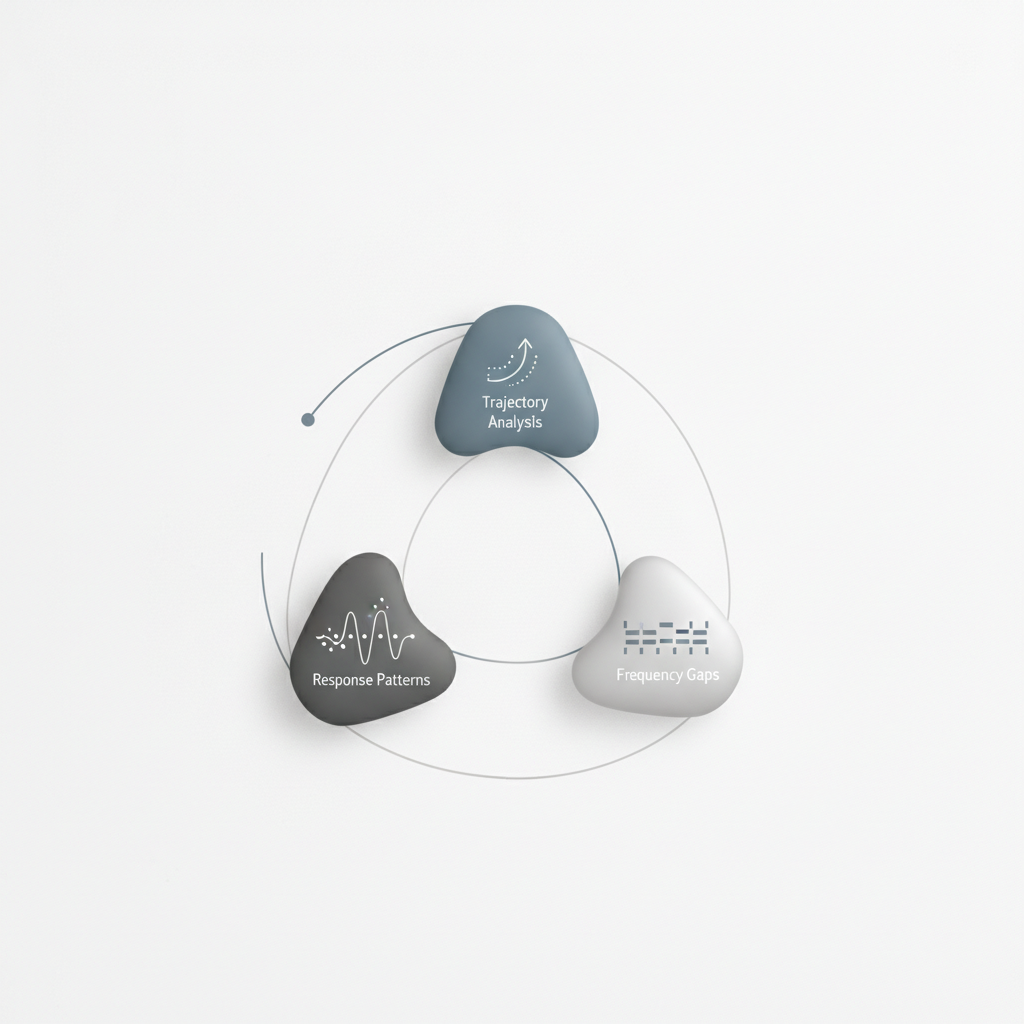
Your CRM records interactions: calls logged, emails sent, vacancies opened, proposals submitted. Individually, these are administrative entries. Collectively, they form behavioural patterns that function as predictive analytics without requiring any additional tooling. Three specific patterns are worth tracking systematically.
The first is response velocity. How quickly a contact replies to your outreach correlates directly with how seriously they are considering working with you. Atlas notes that candidates who engage with follow-up questions within four hours of initial outreach show an 80% higher likelihood of progressing through a process compared to those who respond after two days. The same principle applies to clients. A contact who responds in under two hours is in an active decision phase. A contact who takes a week is not, yet.
The second is fill rate trajectory. RecruitBPM points out that a client whose job orders you filled at 30% that is now being filled at 12% is telling you something important before they tell you directly. That trajectory is a predictive signal of relationship deterioration. Catching it early gives you the chance to act, whether that means a strategic conversation, a change in approach, or a different account owner.
The third is job order frequency and gap analysis. A client who placed three briefs in Q1 and nothing in Q2 has not gone quiet by accident. The gap itself is information. Mapping these intervals across your client base surfaces which accounts are overdue for contact based on their own historical pattern, not a generic follow-up schedule.
For agencies looking to extend this predictive layer beyond their existing client base, hiring intent signals cover the territory your CRM cannot: companies that have not yet worked with you but are entering a hiring window based on external triggers like funding rounds, leadership changes, or headcount growth.

Predictive Analytics Requires Structure, Not More Software
Most agencies do not need a new platform to start using predictive analytics on their CRM data. They need a structured way of reviewing what is already there. The barrier is not technology; it is the habit of treating CRM entries as records rather than signals.
A straightforward starting point is a weekly account review that segments your client base by three variables: time since last placement, current response velocity, and fill rate trend over the last two quarters. Accounts that score poorly on all three are at risk. Accounts that show improving response velocity after a quiet period are warming up. Accounts with a strong fill rate but no brief in 60 days are overdue for contact.
This segmentation is a form of scoring, functionally equivalent to what Greenhouse describes as using historical data to predict future outcomes rather than relying on subjective assessments. It replaces the gut-feel decision of who to call on Monday with a ranked priority list grounded in actual client behaviour.
The AIHR notes that predictive analytics can shorten hiring cycles by 85% and average time to fill by 25% when applied systematically. The same principle of systematic pattern recognition applies to the BD cycle: agencies that prioritise outreach based on behavioural signals rather than alphabetical client lists or personal preference close more business in less time.
The Society for Human Resource Management estimates that a single bad placement costs between 50% and 200% of a candidate's annual salary. The parallel cost for agencies is the missed placement: a client who quietly moved their brief to a competitor because no one caught the early signals of disengagement. Predictive analytics on your CRM data is the mechanism for catching those signals before they become exits.
Predictive Analytics Extends Beyond Your Existing Client Base
Your CRM covers the clients and candidates you already know. The limitation is structural: it cannot tell you about companies entering a hiring window who have never spoken to your agency. This is where external predictive analytics complements internal CRM intelligence.
Hiring intent signals are AI-analysed market indicators, including funding announcements, leadership appointments, and headcount growth patterns, that predict a company's likelihood of hiring before they post a single vacancy. Platforms that translate these signals into a ranked priority list, such as the Heat Score used by Recruit Signals, give BD teams a predictive window of 20 to 30 days before a role appears on a job board.
The combination is more powerful than either in isolation. Your CRM tells you which existing clients are about to re-engage. External hiring intent signals tell you which new prospects are entering a hiring phase. Together, they replace the reactive model of responding to posted vacancies with a proactive model of reaching clients at the moment their need is forming. This is the approach described by signal-led BD versus cold outreach: same effort, materially different timing, significantly better results.
According to research cited by Nrev, citing Peak Sales Recruiting as the root source, 35 to 50 percent of all B2B deals go to the vendor that responds first to a buying signal. In recruitment, that buying signal is the decision to hire. Reaching a company in the predictive window, before that decision is formalised and before a job board posting alerts every competitor, is the structural advantage that intent-based BD creates.
For agencies in specific sectors, this external layer is particularly valuable. Finance sector hiring signals and sector-specific patterns across IT, finance, and healthcare each have distinct predictive indicators that reward agencies who learn to read them early.
Frequently Asked Questions
How do I use predictive analytics if my CRM data is incomplete or inconsistently logged?
Start with the data that is consistently recorded rather than trying to fix everything at once. Response timestamps, job order dates, and placement records are usually reliable even in messily maintained CRMs. Focus predictive analytics on these three variables first, then build logging discipline around the signals you identify as most predictive for your specific client base.
What is the difference between a lagging indicator and a predictive signal in recruitment BD?
A lagging indicator reports on something that has already happened, such as placements made last quarter or revenue per client last year. A predictive signal indicates something that is about to happen, such as a client whose response time has shortened significantly or a contact who has just changed role. Predictive analytics is the practice of identifying and acting on the second category before the outcome becomes obvious.
How many days before a vacancy is posted can external hiring intent signals predict a company's recruitment need?
Hiring intent signals can identify companies entering a hiring window 20 to 30 days before they post a vacancy. This predictive window is created by analysing leading indicators such as funding announcements, leadership changes, and headcount growth patterns, each of which typically precedes active recruitment by several weeks.
Which CRM metrics are most reliable as predictive analytics inputs for client re-engagement?
The three most reliable inputs are response velocity (how quickly a client replies to outreach), fill rate trajectory (whether your fill rate for their orders is improving or declining over time), and job order frequency gap (how long since their last brief compared to their historical average). These three variables, reviewed together, give a more accurate picture of account health than revenue or placement counts alone.
Does using predictive analytics on CRM data replace the need for cold outreach?
Predictive analytics on CRM data reduces the volume of cold outreach needed by prioritising accounts most likely to convert. It does not replace outreach entirely, but it changes who you contact and when. The combination of internal CRM signals and external hiring intent data means you reach both warm existing clients and new prospects at the moment their need is forming, which is materially more efficient than volume-based cold prospecting.


