Agentic AI Recruiting: What Changes Now for Agency BD
42% of large organisations have already deployed AI agents. This pace of adoption means the companies you prospect are restructuring how they hire right now.

Agentic AI recruiting is no longer a concept confined to enterprise HR teams. According to KPMG's Q3 2025 AI Pulse survey, 42% of large organisations have already deployed AI agents, up from just 11% two quarters earlier. For recruitment agency owners running business development (BD) alongside delivery, that pace of adoption changes something immediate: the companies you call on every morning are already restructuring how they hire, which means the intelligence you need to reach them first is shifting too.
This article examines what agentic AI recruiting actually does, where it diverges from the automation tools most agencies already use, and what the shift means for the daily BD research that keeps your pipeline alive.

What Agentic AI Recruiting Actually Means
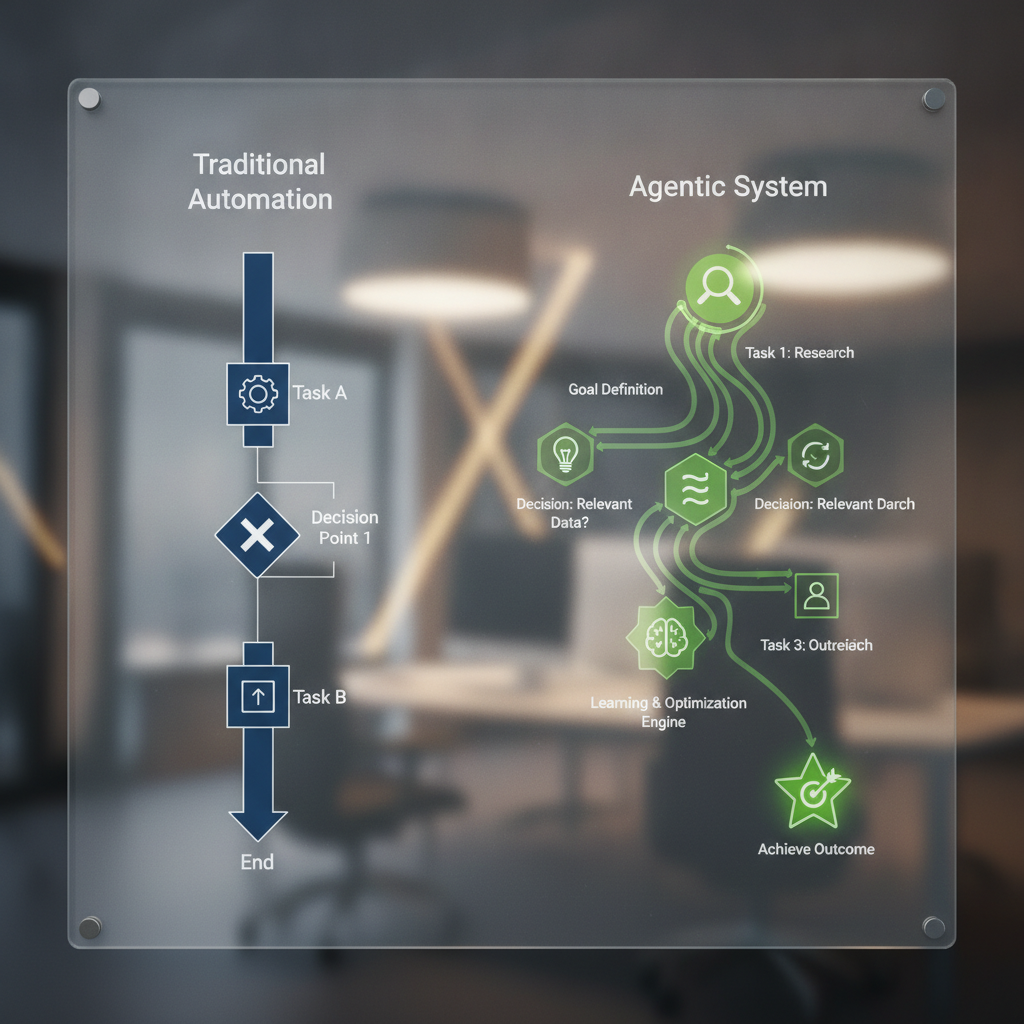
Agentic AI in recruiting refers to autonomous, goal-driven systems that plan and execute multi-step hiring workflows without a human triggering each stage. Where a standard automation tool sends a templated follow-up when a candidate reaches a specific pipeline stage, an agentic system decides what to do next based on the current state of the goal, not a fixed script.
The distinction matters in practice. According to Moveworks' analysis of enterprise recruitment workflows, traditional automation tools like robotic process automation follow fixed scripts that break when data is missing or approvals change. Agentic systems handle ambiguity by adapting, retrieving missing information, and flagging edge cases for human review. That architectural difference is why agentic AI recruiting compounds in value across hiring cycles while conventional automation stays static.
LinkedIn's 2025 Future of Recruiting survey found that 37% of organisations are now actively integrating or experimenting with generative AI tools in recruiting, up from 27% in 2024. But as Moveworks notes, the biggest opportunity is not automating résumé summaries. It is eliminating the coordination failures that slow every hire: the two-week wait for a scorecard, the referral with no clear owner, the hiring manager question that requires someone to dig through three policy documents manually.
Agentic AI Recruiting Versus What Agencies Currently Use
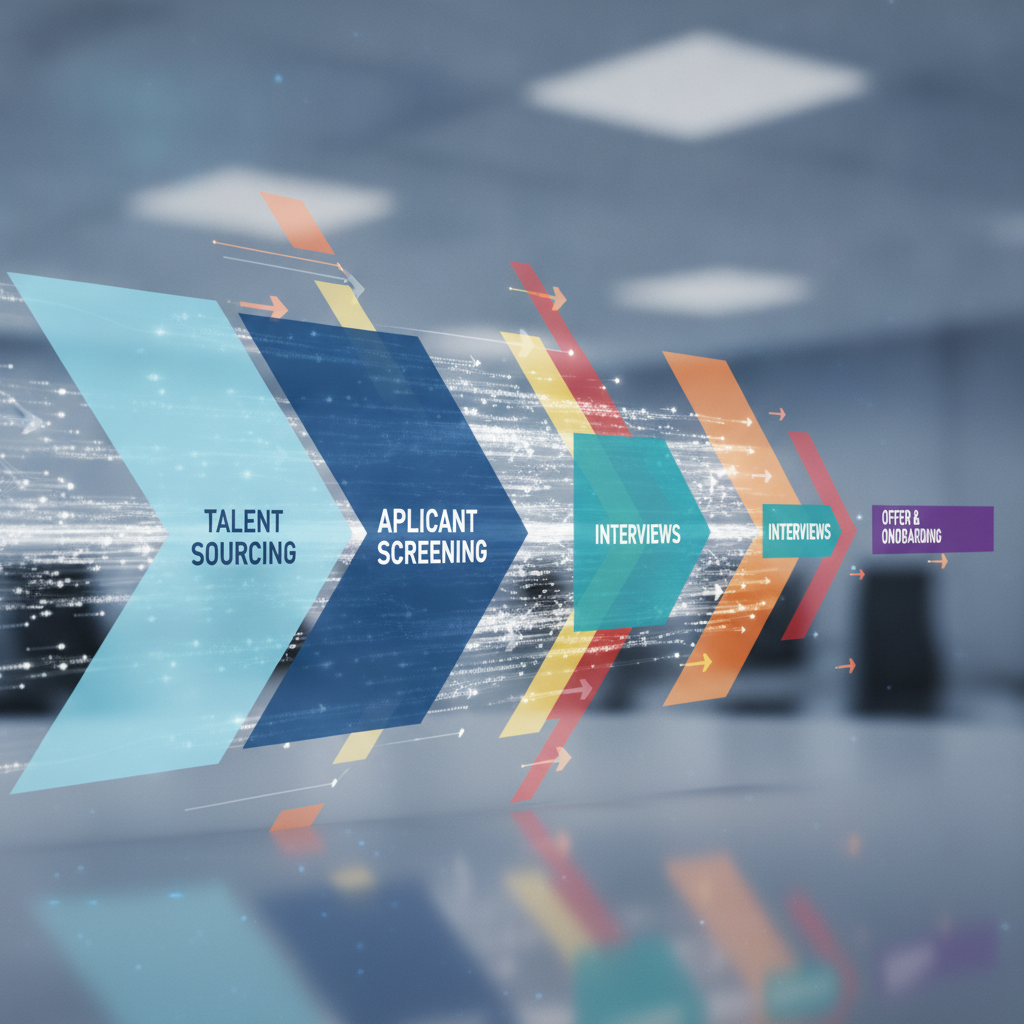
Most recruitment agencies have already automated something: job description drafts, CV screening rules, CRM follow-up sequences. That is single-task automation. Agentic AI recruiting chains tasks together and runs them without human triggers at each step, which is a structurally different capability.
Senseloaf AI's implementation guide for HR leaders frames the difference precisely: traditional automation asks "what instruction did I receive?" while an agentic system asks "what is the goal, and what is the optimal next action?" That distinction determines whether your AI compounds in value over every hiring cycle or remains a static shortcut to manual processes. The guide notes that by 2028, 33% of enterprise applications will incorporate agentic AI, up from less than 1% in 2024.
For a boutique agency with five to fifteen consultants, the relevance is not in deploying agentic systems internally for candidate management. It is in understanding that the companies you target are adopting these systems now, and that adoption is a reliable signal of hiring intent. A company integrating agentic AI recruiting tools is restructuring its talent acquisition function, and that restructuring almost always precedes a new round of external placements. Agencies that predict hiring demand 30 days early reach those companies before the role is posted and before competitors know the conversation is worth having.
Where BD Research Gets Harder and Faster Simultaneously
Agentic AI recruiting changes the timeline of your target companies' hiring cycles in two directions at once. Candidate-facing steps move faster: Phenom reports that organisations using agentic AI in talent acquisition see up to 40% faster time-to-interview and 25-30% higher qualified candidate submissions. Roles fill more quickly when the internal coordination bottlenecks are removed.
That compression means the window between "company decides to hire" and "role is filled" shrinks. If your BD research depends on spotting a live job posting and then making contact, you are competing for a conversation that is already three weeks old. The company has briefed its preferred suppliers, shortlisted candidates are in play, and a cold call from your agency arrives too late to be relevant.
The agencies that avoid this problem are the ones reaching companies before the role is defined, not after it is posted. Hiring intent signals, such as funding announcements, leadership changes, technology adoption, and headcount growth patterns, surface that intent in the 20-30 day window before active recruiting begins. Platforms like Recruit Signals translate those signals into a ranked view of which companies are approaching their hiring window each morning, so your BD calls start with genuine context rather than cold outreach with no hook. As described in the article on signal BD versus cold outreach, timing and context together determine whether a call converts to a conversation.
Early adopters of agentic AI recruiting internally report 60-80% cost reductions in initial screening and candidate outreach, according to Harbinger Group's analysis. That efficiency gain does not eliminate external recruitment spend. It reallocates it toward harder-to-fill roles, specialist searches, and senior appointments where internal tools reach their limits. Those are exactly the briefs a boutique agency should be positioned to win.
What Stays Human in Agentic AI Recruiting
Agentic AI recruiting handles coordination, scheduling, screening, and follow-up autonomously. It does not handle relationship judgement, cultural fit assessment, or the negotiation dynamics that define senior placements. Harbinger Group puts it plainly: "It's not about replacing recruiters, it's about empowering them to focus on what humans do best: relationship-building and strategic decision-making."
Gartner predicts that 15% of day-to-day work decisions will be autonomous by 2028, as noted in Pin's 2026 practitioner guide to agentic AI recruiting. Final hiring decisions still require human review for bias, compliance, and candidate experience. That boundary is not going away, and it is where specialist recruiters who already know the hiring manager, the team culture, and the candidate pool provide value that no autonomous system replicates.
For agency BD, this means your pitch to clients does not need to compete with what their internal agentic tools do. It needs to be positioned around what those tools cannot do: discretionary introductions, market mapping for confidential roles, passive candidate engagement in niche talent pools, and the contextual judgement that comes from placing people in the same vertical for years. As agentic AI recruiting handles more of the transactional hiring volume, the remaining external spend concentrates on the work where relationships and expertise are irreplaceable. That is the brief worth winning.
How Agentic AI Adoption Reshapes Your Prospecting List
Korn Ferry's 2026 Talent Acquisition Trends survey of 1,674 global talent leaders found that 52% plan to add autonomous AI agents to their recruiting teams this year. That scale of adoption creates a practical signal for agency BD: companies actively implementing agentic AI recruiting infrastructure are simultaneously identifying which roles the technology cannot fill, and those roles tend to land with external specialists.
The companies worth watching are not the ones that have fully deployed agentic systems. They are the ones mid-implementation: restructuring their TA function, hiring a Head of Talent Acquisition to lead the change, or closing a funding round that funds the technology investment. Each of those events is a hiring intent signal in its own right, and each one precedes external recruitment spend by three to six weeks on average. The article on how leadership changes predict hiring 30 days early covers this pattern in detail, and the same logic applies when the leadership change is specifically within the talent acquisition function itself.
Running this analysis manually across your target account list every morning is the kind of research that consumes BD time without guaranteeing the companies you surface are actually in a hiring window. Predictive intelligence that monitors hiring intent signals continuously and delivers a fresh, prioritised prospect list each day solves that specific problem, so your consultants spend their hours on conversations rather than research. The goal is to reach the right company at the right moment, not to know everything about every company all the time.
Frequently Asked Questions
What is agentic AI recruiting and how does it differ from standard recruitment automation?
Agentic AI recruiting refers to autonomous systems that plan and execute multi-step hiring workflows without human prompts at each stage. Standard recruitment automation executes fixed, pre-programmed rules and breaks when conditions fall outside its parameters. Agentic systems adapt in real time, retrieving missing information and adjusting their approach based on the current state of a defined goal rather than a fixed script.
How fast is agentic AI adoption among companies that recruitment agencies target?
According to KPMG's Q3 2025 AI Pulse survey, 42% of large organisations had deployed AI agents by Q3 2025, up from 11% just two quarters earlier. Korn Ferry's 2026 Talent Acquisition Trends survey of 1,674 global talent leaders found that 52% plan to add autonomous AI agents to their recruiting teams in 2026. Adoption is accelerating sharply, not gradually.
Does agentic AI recruiting reduce the need for external recruitment agencies?
Agentic AI recruiting handles coordination-heavy, high-volume, and transactional hiring more efficiently. It does not replace the relationship judgement, passive candidate networks, or specialist market knowledge that boutique agencies bring to senior, niche, or confidential searches. As internal tools absorb transactional volume, external recruitment spend tends to concentrate on the harder briefs where specialist expertise matters most.
Which types of roles are most likely to remain with external recruiters as agentic AI adoption grows?
Roles requiring passive candidate engagement, confidential replacement searches, senior leadership appointments, and niche technical or specialist positions are least suited to autonomous internal systems. These roles depend on market relationships, contextual judgement, and access to candidates who are not actively applying, none of which agentic AI recruiting systems currently replicate effectively.
How should a recruitment agency adjust its BD approach as target companies implement agentic AI?
The core adjustment is timing. As agentic systems compress internal hiring cycles, the gap between a company deciding to hire and a role being filled narrows. BD outreach needs to reach companies in the 20-30 day window before active recruiting begins, not after a job posting appears. Monitoring hiring intent signals, such as TA leadership changes, technology investment announcements, and funding events, surfaces that window before competitors see it.
What signals indicate that a target company is implementing agentic AI recruiting tools?
Key signals include new Head of Talent Acquisition or VP People appointments, job postings for AI implementation or HR technology roles, funding announcements that mention workforce technology investment, and vendor partnership announcements from major agentic AI recruiting platforms. Each of these events typically precedes a restructuring of the company's external recruitment relationships by three to six weeks.
Is agentic AI recruiting compliant with data protection regulations like GDPR?
Compliance depends on implementation. Leading practitioners recommend encrypting candidate data at rest and in transit, enforcing role-based access controls, maintaining auditable decision logs, and bias auditing AI outputs regularly. GDPR and equivalent frameworks apply fully to automated candidate screening and scoring, which means organisations deploying agentic AI recruiting need documented governance frameworks and clear escalation protocols for human review of consequential decisions.


