How Hiring Signals Differ in IT, Finance and MedTech
Discover why hiring signals fire differently in IT, finance, and MedTech. Learn the specific triggers that predict client hiring 20-30 days before adverts.

Hiring signals are the early indicators that tell you a company is about to recruit before any job posting appears. For recruitment agencies working across IT, finance, and MedTech, these signals don't behave the same way. Each sector fires different triggers, moves at a different pace, and rewards early contact at a different moment. If you're reading the same generic signals across all three, you're leaving placements on the table.
Why Hiring Signals Differ Across IT, Finance, and Healthcare
Hiring signals vary by sector because hiring decisions are driven by different business pressures in each one. A technology company responds to funding rounds and product build cycles. A financial services firm responds to regulatory change and market conditions. A healthcare organisation responds to patient demand, government spending, and clinical compliance requirements. Reading the wrong signal in the wrong sector produces cold outreach at precisely the wrong moment.
The type of role being added matters as much as the volume. As Aura's analysis of hiring trend data makes clear, the key insight is not just how quickly a company is growing its workforce, but where it is placing its talent bets. A company rapidly adding sales and customer success professionals signals commercial scale. One expanding its R&D team signals a product still in development. Both are hiring; neither requires the same outreach.

Hiring Signals in the IT Sector: Speed and Role Composition
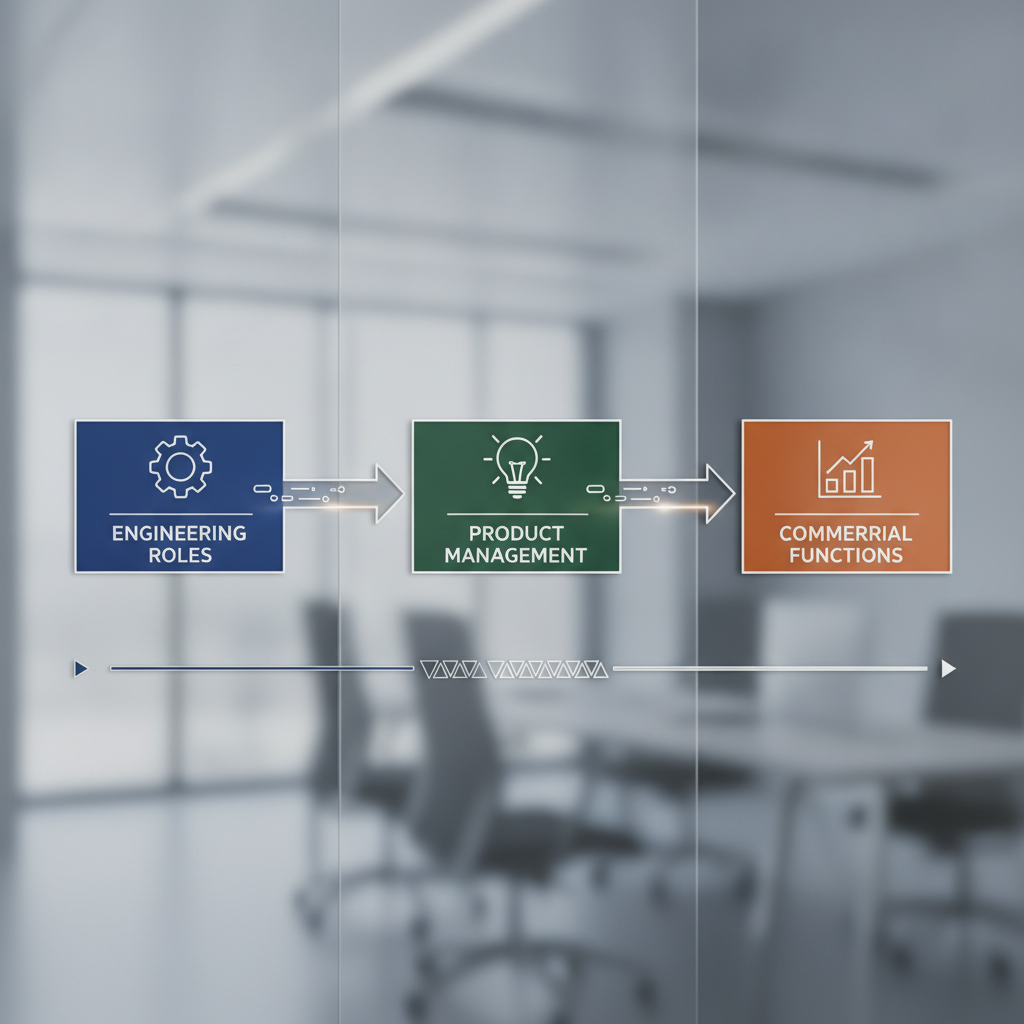
Hiring signals in the IT sector centre on funding activity, product launches, and shifts in role composition rather than raw headcount growth. When a technology company closes a Series A or B round, it typically moves fast: engineering roles appear first, followed quickly by product management and, if the company has found product-market fit, commercial functions. That sequence is the signal. It tells you not just that hiring is coming, but which discipline to lead with.
However, raw hiring velocity is no longer the reliable predictor it once was. The rise of AI-powered automation has reduced the need for large-scale engineering and support teams. Aura's workforce intelligence analysis notes that companies today may achieve higher revenue per employee without aggressive hiring, making the type of roles being added and skill density more important than sheer volume. For IT-focused recruitment agencies, this means tracking role composition as a hiring signal, not just headcount announcements.
Leadership changes are another reliable IT hiring signal. A new CTO or VP of Engineering almost always precedes a restructuring of the technical team. Spotting that appointment early, before the restructure is announced, is the kind of predictive window that leadership change signals provide to agencies willing to act on them.
Hiring Signals in Financial Services: Compliance Pressure and Execution Speed
Hiring signals in financial services are shaped by compliance requirements, regulatory change, and the sector's well-documented struggle to move candidates quickly through a risk-sensitive process. According to GoodTime's 2026 Hiring Insights Report, financial services hiring teams enter 2026 under sustained pressure from execution complexity and tighter timelines, and time-to-hire continues to worsen for most organisations.
That slow process is itself a signal opportunity. When a financial services firm begins a compliance hiring cycle, driven by new regulation, an audit, or a product launch into a regulated market, the cycle takes longer to complete than in other sectors. Recruitment agencies that identify the trigger early, whether a regulatory announcement, a Companies House filing, or a leadership appointment in a compliance function, can make contact during the planning phase rather than chasing a live vacancy.
GoodTime's report also highlights a tension that directly shapes outreach timing: fraudulent or AI-assisted candidate misrepresentation has become a material concern in financial services, forcing hiring teams to apply greater scrutiny while still moving faster. Firms navigating that tension are more receptive to recruiters who can demonstrate candidate quality, not just speed. The finance sector hiring signals worth tracking include compliance appointments, regulatory filings, and technology modernisation announcements, all of which precede structured hiring campaigns in this sector.
Predictive intelligence platforms that aggregate these triggers translate them into a Heat Score, a ranked list of companies most likely to need recruitment services in the next 20 to 30 days, giving BD teams a prioritised list rather than a cold database to work from.

Hiring Signals in MedTech: Health-Tech Scaling and Leadership Change
Hiring signals worth tracking in MedTech and health-tech mirror the pattern that recruitment agencies already recognise in SaaS and fintech. As health systems and their vendors digitise, the fastest-growing hiring categories are technical: machine learning engineers, clinical informatics specialists, regulatory affairs professionals, and data scientists. These are commercial roles at scaling companies, and they generate the same signals that predict hiring in any other tech-adjacent vertical.
When a MedTech company closes a Series B, secures a hospital system partnership, or hires a new Chief Medical Officer, a wave of technical and commercial hiring typically follows within four to six weeks. The signal pattern is familiar: funding, leadership change, headcount velocity, and product-adjacent hiring sequences.
Leadership appointments are particularly reliable in this space. A new VP of Engineering at a health-tech scale-up, a new Chief Medical Officer, or a new Head of Regulatory Affairs almost always precedes team expansion. Leadership change signals fire consistently across MedTech, biotech, and healthcare software, giving recruitment agencies the same predictive window they rely on in pure technology recruitment.
For agencies specialising in life sciences, MedTech, or health-tech leadership, the signal set is well-defined: funding events, VP-level appointments, headcount growth in engineering and commercial functions, and expansion into new therapeutic areas or regional markets. Each precedes public job postings by the standard 20 to 30 day predictive window.
Acting on Sector-Specific Hiring Signals Before Competitors Do
Hiring signals only create competitive advantage when you act on them within the predictive window, the 20 to 30 days before active recruitment begins. After that window closes, you're competing on live vacancies with every other agency watching the same job boards. The agencies consistently winning new clients in IT, finance, and healthcare are those that have moved the point of first contact from reactive to predictive. That shift, as the evidence on the 20-day advantage shows, changes both response rates and conversion.
Recruit Signals tracks sector-specific hiring intent signals across funding, leadership, technology adoption, and workforce disruption data, giving recruitment agencies the earliest possible view of which companies are entering their hiring window. The difference between reading hiring signals by sector and ignoring them is the difference between leading a conversation and chasing a posting.
Frequently Asked Questions
What are the most reliable hiring signals in the IT sector?
The most reliable hiring signals in IT are funding announcements, shifts in role composition (particularly from engineering-heavy to commercial hiring), product launch activity, and leadership appointments in technical functions. Raw headcount growth has become less predictive as AI automation reduces the need for large engineering teams, so tracking which roles are being added, and in what sequence, is now more useful than tracking volume alone.
How do hiring signals in financial services differ from other sectors?
Financial services hiring signals are closely tied to regulatory change, compliance requirements, and technology modernisation programmes rather than growth alone. The sector's hiring process is also longer and more risk-sensitive than most, meaning the predictive window between signal and vacancy is wider. Agencies that identify compliance or audit triggers early have more time to build relationships before live roles appear.
Why are MedTech and health-tech strong sectors for signal-led recruitment business development?
MedTech, biotech, and health-tech scale-ups generate hiring signals in the same pattern as SaaS: funding rounds, leadership appointments (especially CMOs and VPs of Engineering), and headcount growth in technical and regulatory functions. These signals precede active hiring by three to five weeks, giving recruitment agencies working in life sciences or health-tech leadership the standard predictive window.
How far in advance do hiring signals typically appear before a job is posted?
Hiring signals typically appear 20 to 30 days before a company begins actively posting roles, though the window varies by sector. Financial services tends toward a longer window because its hiring process is slower and more compliance-driven. Technology companies move faster but still show detectable signals at the funding and leadership appointment stage before roles are confirmed publicly.
Which signals should a recruitment agency track if it works across multiple sectors?
Agencies working across sectors should prioritise signals that are sector-agnostic in structure but sector-specific in trigger: funding rounds (especially relevant in IT), regulatory announcements (especially relevant in finance), and technology adoption or partnership announcements (especially relevant in healthcare). Leadership appointments are a reliable cross-sector signal. The key is calibrating what each signal means for hiring pace and role type in each specific sector rather than applying a single interpretation.
Is signal-led outreach more effective than cold outreach for winning new recruitment clients?
Signal-led outreach consistently produces higher response rates than cold outreach because contact is made when a company already has a hiring need forming, even if it hasn't articulated it yet. The comparison between signal-led BD and cold outreach shows the difference lies in timing: the same message, sent at the moment a hiring trigger fires rather than at random, lands in a context where the recipient is already thinking about the problem you're solving.


