How Recruiters Can Predict Hiring Demand 30 Days Early
Discover how recruitment agencies predict hiring demand 30 days before job postings. Learn pattern recognition techniques that give you a competitive advantage.

Most recruitment agencies discover a company is hiring when the job advert goes live. By that point, the client has already briefed two competitors, shortlisted a PSL, and mentally moved on. If your BD strategy depends on reacting to visible vacancies, you are always starting from behind.
Predicting hiring demand 30 days before a role is posted is not guesswork. It is pattern recognition applied to signals that companies broadcast long before they open a vacancy.

Why Visible Vacancies Are a Lagging Indicator
A job posting is the last step in a hiring decision, not the first. By the time a role appears on LinkedIn or a job board, a company has typically confirmed budget, agreed a headcount plan, and often spoken to preferred suppliers. Agencies that monitor job boards are responding to decisions already made.
The National Association for Colleges and Employers found that nearly 70% of employers plan to hire within the next 12 months, but 55% expect skills shortages to worsen, particularly in technology and finance. That hiring intent exists weeks before a vacancy is written. The question is whether your agency is positioned to find it early.
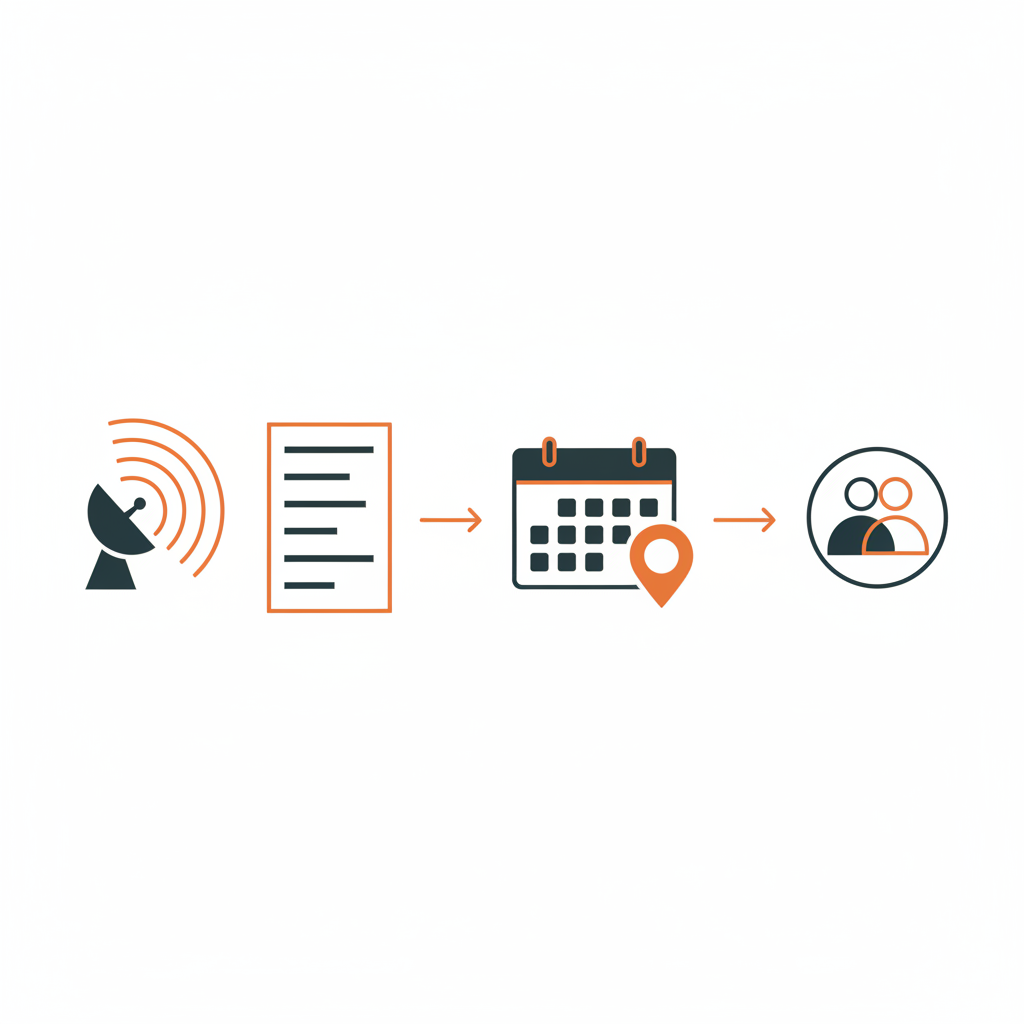
Hiring intent signals are AI-analysed market signals, such as funding rounds, headcount growth, leadership changes, and technology adoption, that predict future hiring need before job postings appear. These signals do not require speculation. They reflect real business events that historically precede recruitment activity.
The 20-day advantage describes the predictive window, the period 20 to 30 days before active hiring begins, when outreach lands before competitors know the opportunity exists. Agencies that contact a hiring manager during this window are not pitching cold; they are arriving at exactly the right moment. See how this works in practice in The 20-Day Advantage: Win Clients Before Roles Are Posted.
Which Signals Actually Predict Hiring Demand
Not every business event is a reliable precursor to hiring. Four signal categories have the strongest predictive track record for recruitment agencies.
Funding announcements
A Series A or Series B funding round almost always triggers headcount growth. Companies receiving growth capital need to deploy it, and people are typically the first expenditure. This signal is public, timestamped, and traceable via Companies House filings, Crunchbase, or Dutch Chamber of Commerce (KvK) records.
Senior leadership appointments
A new VP of Engineering or Chief Revenue Officer rarely arrives alone. New leaders rebuild teams around their own methodology, often within the first 90 days. A single senior hire frequently signals three to five follow-on roles in the same function.
Headcount growth patterns
Sustained month-on-month headcount growth on LinkedIn, particularly in one department, indicates a scaling business.
Technology adoption signals
When a company adopts a new CRM, data platform, or enterprise software suite, they typically need specialists to implement and manage it. Technology adoption events are detectable before hiring begins and correlate strongly with specialist recruitment demand.

What Happens When Agencies Act on These Signals
Agencies proactively targeting high-growth accounts using funding alerts and headcount growth data can see an increase in job orders from those clients versus waiting for roles to be advertised.
Platforms like Recruit Signals translate these signals into a Heat Score, a ranked list showing which companies are most likely to need recruitment services in the next 20 to 30 days. Rather than a cold prospect database, BD teams receive a prioritised outreach list built from concurrent signal data.
How to Build a Signal-Based BD Process
The methodology does not require a specialist data team. It requires discipline about which signals to monitor and how to act on them within the predictive window.
Start by defining your signal stack. Choose two or three signal types most relevant to your sector. Technology agencies should weight funding rounds and engineering hires heavily. Finance recruiters should track leadership changes and M&A activity. Generalist agencies benefit most from headcount growth patterns across multiple functions.
Next, set a response protocol. A signal is only useful if your team acts on it within 48 to 72 hours. Assign signal monitoring to a specific BD role, and create templated outreach that references the trigger event directly. Mentioning a funding round or a new leadership appointment in your first message demonstrates market awareness rather than cold canvassing.
NACE's 2025 Recruiting Benchmarks Report notes that the percentage of interviews resulting in a job offer has reached a five-year high, while offer acceptances and three-year retention have both declined. Hiring managers are under pressure to move faster and smarter. An agency that contacts them before a role opens, with relevant market context, solves a real problem at the right moment.
For a broader framework on applying these signals to a full BD cycle, the Recruitment Agency BD Playbook for a Stabilising Market covers how to structure pipeline around predictive data rather than reactive vacancy monitoring.
Frequently Asked Questions
How far in advance can hiring intent signals predict a company's recruitment need?
Reliable hiring intent signals typically predict recruitment activity 20 to 30 days before a job posting appears. Funding announcements and senior leadership appointments give the longest lead time, often four to six weeks. Technology adoption signals tend to give a shorter window of two to three weeks before specialist roles are opened.
Which industries respond best to signal-based recruitment BD?
Technology, finance, and engineering sectors show the strongest signal-to-hire correlation because their recruitment triggers, funding rounds, product launches, regulatory changes, are well-documented and publicly trackable. Professional services and healthcare sectors are also responsive, particularly when leadership change signals are monitored alongside headcount growth data.
Do companies mind being contacted before they have posted a vacancy?
Hiring managers consistently report that relevant, timely outreach before a vacancy opens is welcome rather than intrusive. The key word is relevant: referencing a specific business event, such as a recent funding round or new hire, signals genuine market knowledge. Generic cold outreach is unwelcome at any stage; signal-informed outreach is not cold at all.
How is signal-based prospecting different from using LinkedIn Talent Insights?
LinkedIn Talent Insights shows historical headcount data and skills distribution across a company, but it does not combine multiple concurrent signals to predict hiring probability within a specific window. Signal-based prospecting layers funding data, leadership changes, technology adoption, and growth patterns together to generate a predictive ranking, rather than a retrospective snapshot.
How many signals does a company need to show before it is worth contacting?
Most predictive models treat concurrent signals as multiplicative rather than additive. A company showing one signal, such as a funding round, is a moderate prospect. The same company also showing a new VP appointment and headcount growth in a target function becomes a high-priority account. Platforms like Recruit Signals quantify this through the Heat Score, weighting companies by how many signals are active simultaneously.
What is the typical conversion improvement when using intent-based prospect lists?
Cube19's 2024 Staffing Performance Benchmark found that top-quartile agencies using intent-based prospect lists are 1.5 times more likely to convert new client meetings into signed terms compared to median agencies.


