Dormant Clients Cost Less to Win Than New Prospects
Client reactivation costs five to seven times less than new prospect acquisition. Reach dormant clients during the 20-30 day hiring signal window to see how.

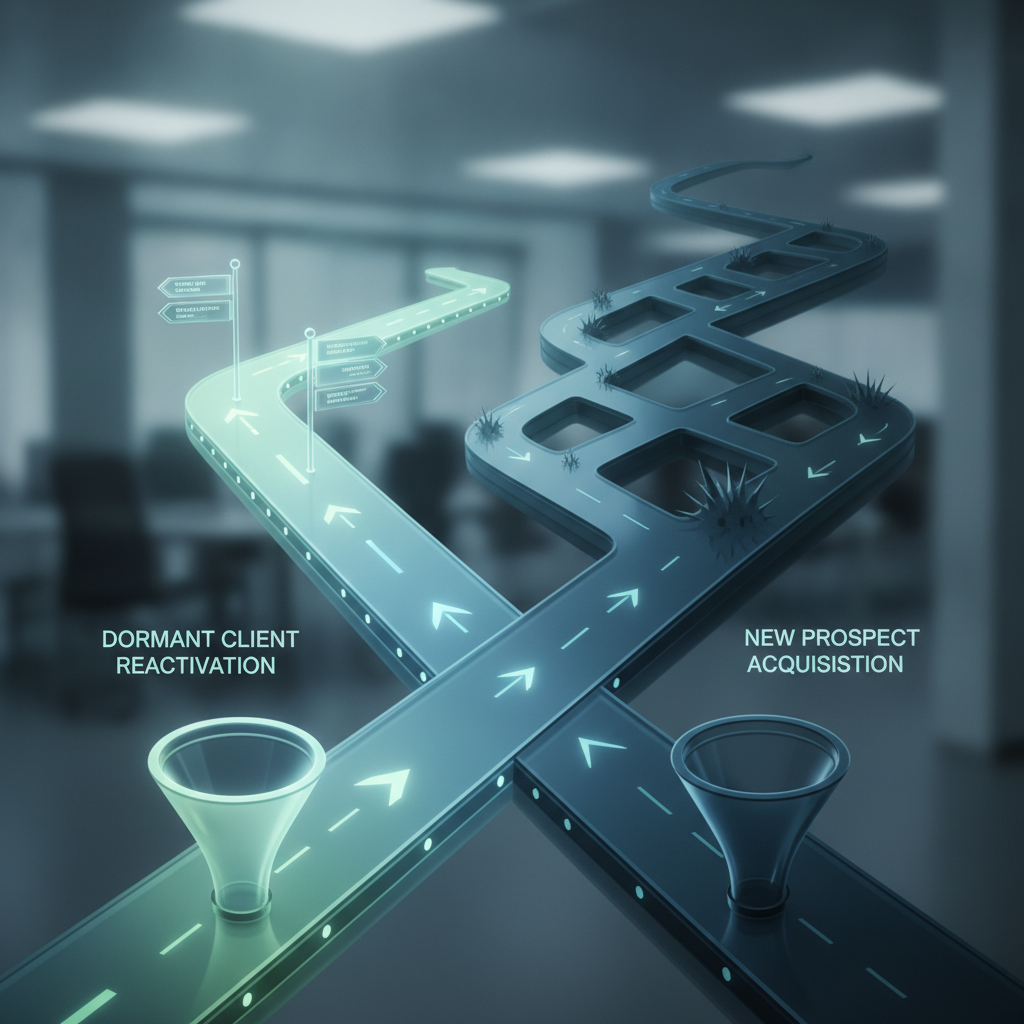
Client reactivation is the fastest route to revenue that most recruitment agencies ignore. While your business development team cold-calls strangers, a warm pipeline of former clients sits untouched in your CRM: companies that already know your process, have paid your fees before, and are far closer to saying yes again than any cold prospect ever will be. According to research cited by Lob, reactivating a dormant customer costs five to seven times less than acquiring a new one. For a boutique recruitment agency running lean BD resource, that gap is not a marginal efficiency gain; it is a strategic priority.
The problem is that most agencies treat their dormant client list as a graveyard rather than a pipeline. This article explains why client reactivation deserves dedicated attention, how to identify which dormant accounts are worth approaching first, and what signals predict the right moment to reach out.
Why Dormant Clients Are Your Lowest-Cost BD Opportunity
Dormant clients already cleared the hardest hurdle in recruitment sales: they trusted you with a brief. They know your sector specialisms, they have been through your process, and at least one hiring manager inside that business has a positive reference point for your agency. Cold outreach asks a stranger to take a leap of faith; client reactivation asks a former buyer to remember why they chose you.
The cost differential is significant. Lob's analysis of dormant customer reactivation puts the acquisition cost gap at five to seven times, meaning a campaign that reactivates even a handful of former clients can deliver stronger ROI than months of cold prospecting. For a five-to-fifteen person agency with one or two BD consultants, that ratio changes what deserves to be on the weekly call sheet.
There is also a trust dynamic that cold outreach cannot replicate. FMT Solutions notes that dormancy is rarely caused by dissatisfaction; it is usually a relevance problem. The client stopped hearing from you in a way that connected with their current situation. That is a recoverable position. A competitor who never placed with them has a much steeper hill to climb. As the article on keeping clients costing less than chasing new ones sets out, the economics of retention and reactivation consistently favour the agency that stays close to its existing relationships.
Client Reactivation Starts With Knowing When to Reach Out
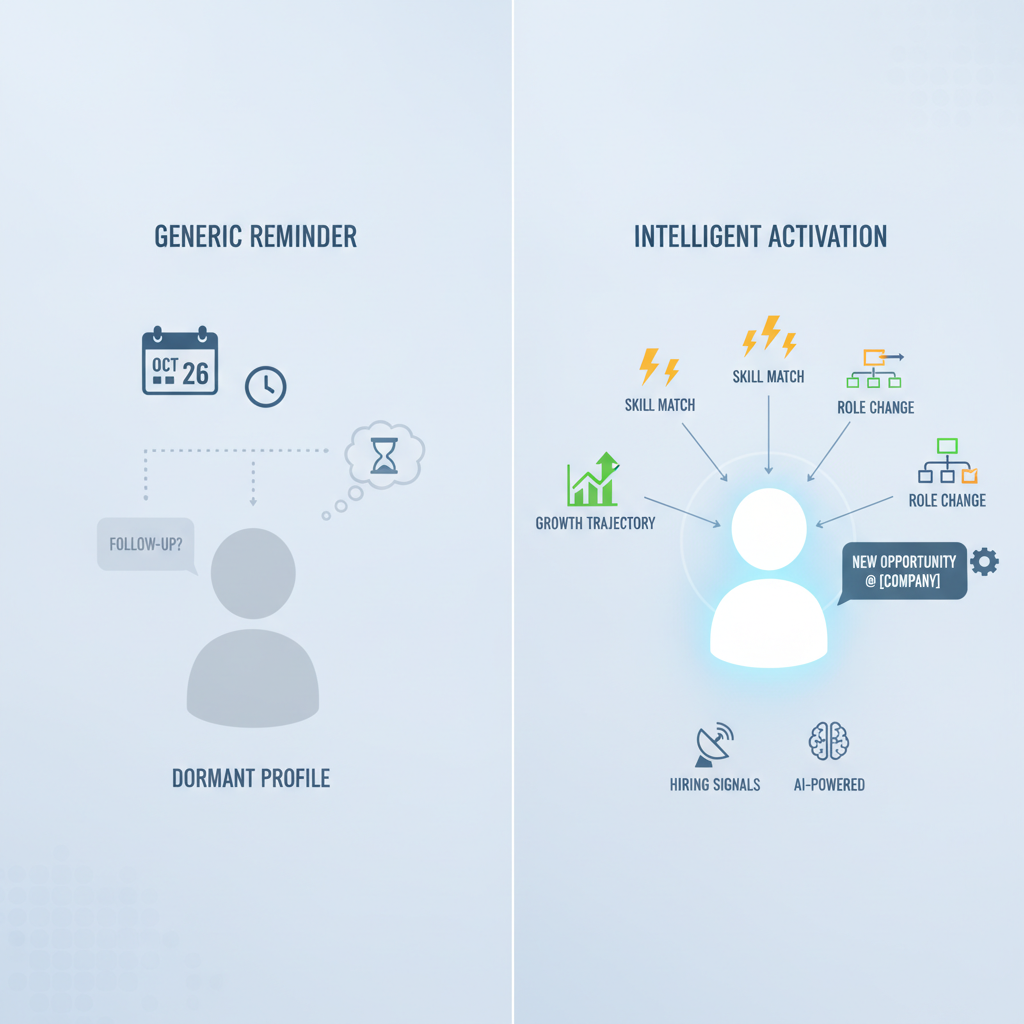
The biggest mistake in client reactivation is treating it as a calendar exercise rather than a signal-driven one. Checking in every six months because the CRM reminds you is not the same as contacting a dormant client the week they start thinking about a new hire. Timing determines whether your outreach lands as a welcome prompt or an awkward interruption.
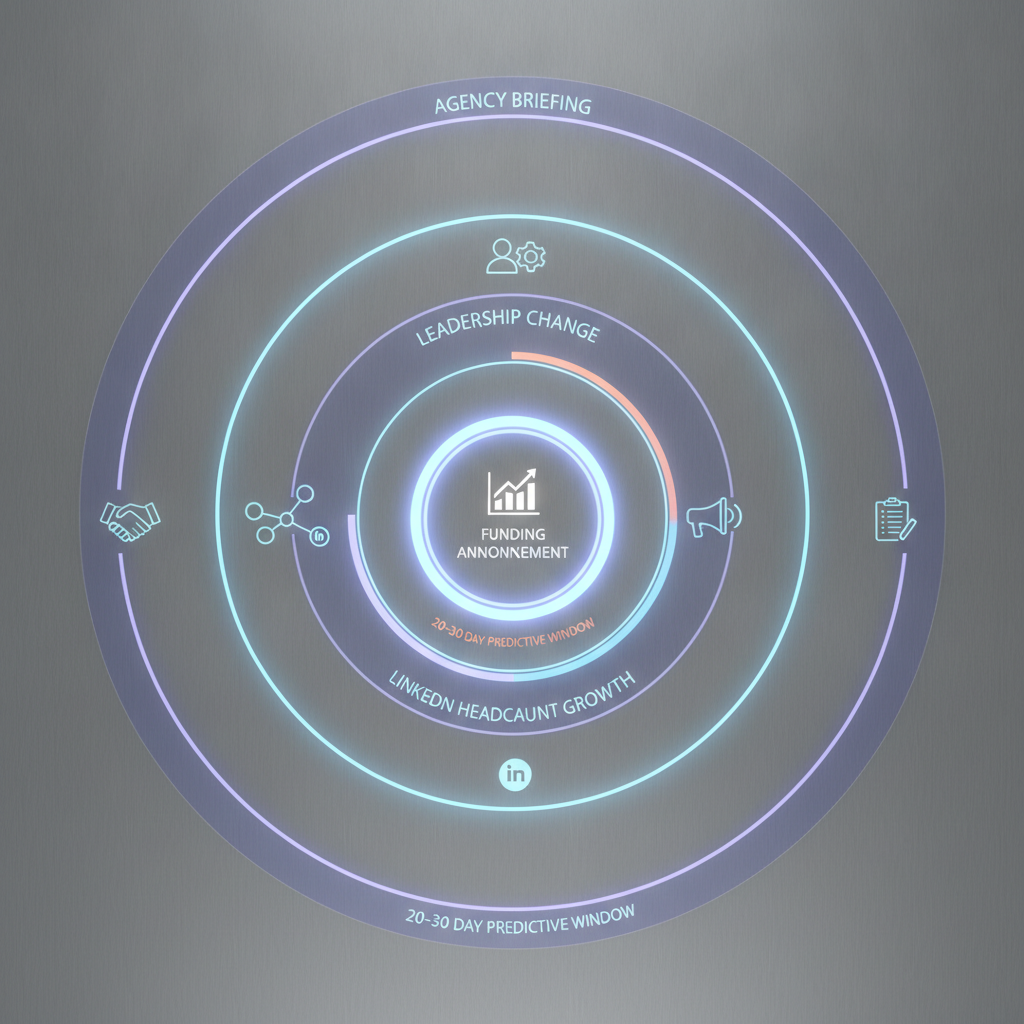
Hiring intent signals are the mechanism that makes timing actionable. A hiring intent signal is an AI-analysed market event, such as a funding round, a leadership change, a new office opening, or a headcount surge on LinkedIn, that indicates a company is entering a period of recruitment need. These signals predict hiring activity 20 to 30 days before the company posts a role or briefed an agency. For a dormant client, this predictive window is the difference between being first back in the conversation and discovering they already placed three roles with a competitor.
Consider a practical example. A former technology client you placed with 18 months ago has gone quiet. Your last outreach got no reply. But their CEO just changed, and they have posted three new LinkedIn profiles in their engineering function in the past fortnight. Both are recognised hiring intent signals. Reaching out now, with a message that references the leadership transition and their apparent growth phase, is materially different from a generic check-in. Leadership changes are a documented early-hire predictor, and agencies that track them gain a head start on the reactivation conversation.
Platforms like Recruit Signals translate these signals into a Heat Score: a ranked list of companies, including dormant clients, most likely to need recruitment services in the next 20 to 30 days. Rather than guessing which former accounts to prioritise, a BD consultant can open a prioritised list each morning and see which dormant clients are showing activity worth acting on. The approach converts client reactivation from a hope-and-timing exercise into a structured, signal-led process.
How to Segment Dormant Clients for Client Reactivation
Not every lapsed client deserves the same investment of time. Effective client reactivation begins with segmentation. A company that placed two contractors with you three years ago warrants a different approach than a client who ran five retained searches and then went silent after a change in procurement policy.
Intelemark's analysis of dormant account reactivation applies the principle that high-value former accounts deserve prioritised attention because reactivating them amplifies revenue quickly. The segmentation logic used in B2B sales translates directly to recruitment: look at recency of last placement, total fees generated, seniority of roles placed, and the relationship depth your consultants had with the hiring managers involved.
Once segmented, your reactivation outreach can be calibrated accordingly. High-value dormant clients justify a personal call from a senior consultant or director, referencing the specific roles you filled and the market context that has shifted since. Mid-tier accounts may respond to a targeted email that leads with a relevant market insight, a salary movement in their sector, a skill shortage you are seeing, or a candidate profile that matches a role they struggled to fill previously. The goal in both cases is to demonstrate visible and relevant value, not to pitch. FMT Solutions describes this well: dormant clients are waiting for a reason to re-engage, and that reason is almost never a discount; it is evidence that you understand where they are now.
For recruitment agencies whose CRM holds hundreds of dormant accounts, the segmentation task can feel daunting. This is where the signals already sitting in your CRM become valuable: companies in your database that are showing real-world hiring activity surface themselves as reactivation candidates without requiring manual research across every record.
What Makes a Client Reactivation Message Work
Client reactivation outreach fails when it reads like a check-in and succeeds when it reads like a relevant insight. The distinction matters because dormant clients have already filtered out generic agency emails. They receive dozens of speculative approaches from recruiters every month. Your message needs to give them a reason to respond that has nothing to do with your desire to fill their next role.
Intelemark's reactivation benchmarks show that structured outreach campaigns achieve an 18% reactivation rate within 30 days, with 70% of reactivated accounts remaining active after 90 days. Those figures come from B2B contexts broadly, not recruitment specifically, but the underlying dynamic holds: personalised, timely outreach that connects to the client's current situation outperforms volume-based approaches every time.
The message structure for recruitment client reactivation should follow a simple sequence. Open with a specific observation about something relevant to their business, a hiring trend in their sector, a signal you have noticed, or a candidate profile that fits a role type they have hired for before. Follow with a brief reference to the work you did together, keeping the tone conversational rather than transactional. Close with a low-friction invitation: a short call, a market briefing, or simply a question that invites a reply. Avoid leading with your fee structure, your current candidate pool, or anything that signals you need the business more than you understand their situation.
For agencies comparing this approach against cold outreach, the contrast is instructive. Signal-led BD consistently outperforms cold outreach on response rates precisely because context replaces volume as the primary driver of engagement. A dormant client is already partway there: the context exists in your shared history. The signal tells you when to use it.
Frequently Asked Questions
How long should a client be inactive before a recruitment agency treats them as dormant?
There is no universal threshold, but most recruitment agencies find that 12 months of no placement activity and no substantive communication is a reasonable marker for dormancy. Some agencies apply a shorter window of six months for high-frequency clients in sectors like technology or financial services, where hiring cycles are faster. The key criterion is not calendar time alone; it is whether your relationship with that client's hiring managers is still warm enough to open a conversation without reintroduction.
What signals should trigger a client reactivation outreach?
The most reliable triggers are organisational changes that precede hiring: a new senior leader joining, a funding announcement, a company restructure, or visible headcount growth on professional networks. Leadership changes in particular are a documented predictor of new hiring briefs, because incoming executives routinely rebuild teams around their priorities. Tracking these events in near real time gives your outreach a specific, relevant hook rather than a generic check-in premise.
Is client reactivation worth prioritising over new logo acquisition?
For most boutique recruitment agencies, the answer is yes, at least as a parallel stream rather than a replacement. The cost of reactivating a former client is five to seven times lower than acquiring a new one, the sales cycle is shorter because trust already exists, and the risk of wasted BD time is lower because you have direct evidence that the company buys recruitment services. New logo acquisition should continue, but treating dormant clients as a lower priority than cold prospects is a structural inefficiency most agencies cannot afford.
How many dormant clients should a recruitment agency target in a reactivation campaign?
Quality of outreach matters more than volume. A focused campaign targeting 20 to 30 high-value dormant accounts with personalised, signal-triggered outreach will typically outperform a bulk email to 200 lapsed contacts. Start by segmenting your CRM by total fees placed, recency of last contact, and role seniority, then prioritise the top tier for direct, personal outreach. Expand volume only once you have a repeatable message framework that is generating replies from that top cohort.
How do hiring intent signals improve client reactivation timing?
Hiring intent signals identify when a dormant client is entering a recruitment need before they post a job or brief an agency. Events like leadership appointments, funding announcements, or unusual headcount growth on professional networks typically precede active hiring by 20 to 30 days. Reaching out to a dormant client during this predictive window means your message arrives when they are already thinking about resourcing, which is materially different from a cold check-in that arrives with no context. The result is a higher probability of response and a shorter path to a reinstated brief.


