Recruitment Agency BD for a Stabilising Market
Discover how recruitment agencies are adapting to slower hiring cycles and lower vacancies. Learn why multi-channel systems outperform cold calling strategies.

Most recruitment agencies built their business development habits in a different market. High vacancy volumes, short sales cycles, and clients chasing candidates meant that reactive BD worked well enough. That market is gone. What we have now is a stabilising market: lower vacancy counts, longer decision cycles, and hiring managers who move slowly because they can. If your BD playbook has not changed, your pipeline is already suffering.
The good news is that a stabilising market rewards the agencies that adapt first. It separates those with disciplined, multi-channel systems from those still relying on cold calls to live vacancies. According to Tracker RMS's 2025 staffing agency playbook, agencies that run a structured BD system, ranking prospects by signal strength and working them in priority order, consistently win more briefs and move faster than those relying on ad hoc outreach, because effort flows to the accounts most likely to be hiring. That gap widens when the market tightens.

Why Reactive BD No Longer Works in a Stabilising Market
Reactive BD means waiting for a job posting to appear, then calling the hiring manager. In a high-volume market, this approach captures enough deals through sheer repetition. In a stabilising market, it fails for two reasons: there are fewer postings to react to, and every agency in your vertical is reacting to the same ones.
Reacting to live vacancies is one of the weakest indicators of real hiring intent. Loxo's 2025 BD analysis found that agencies using recruitment intelligence and automated signals to trigger outreach see an increase in meeting rates with new prospects. The reason is straightforward: when you contact a company before they post a role, you are a consultant. When you contact them after, you are a vendor competing on speed and margin.
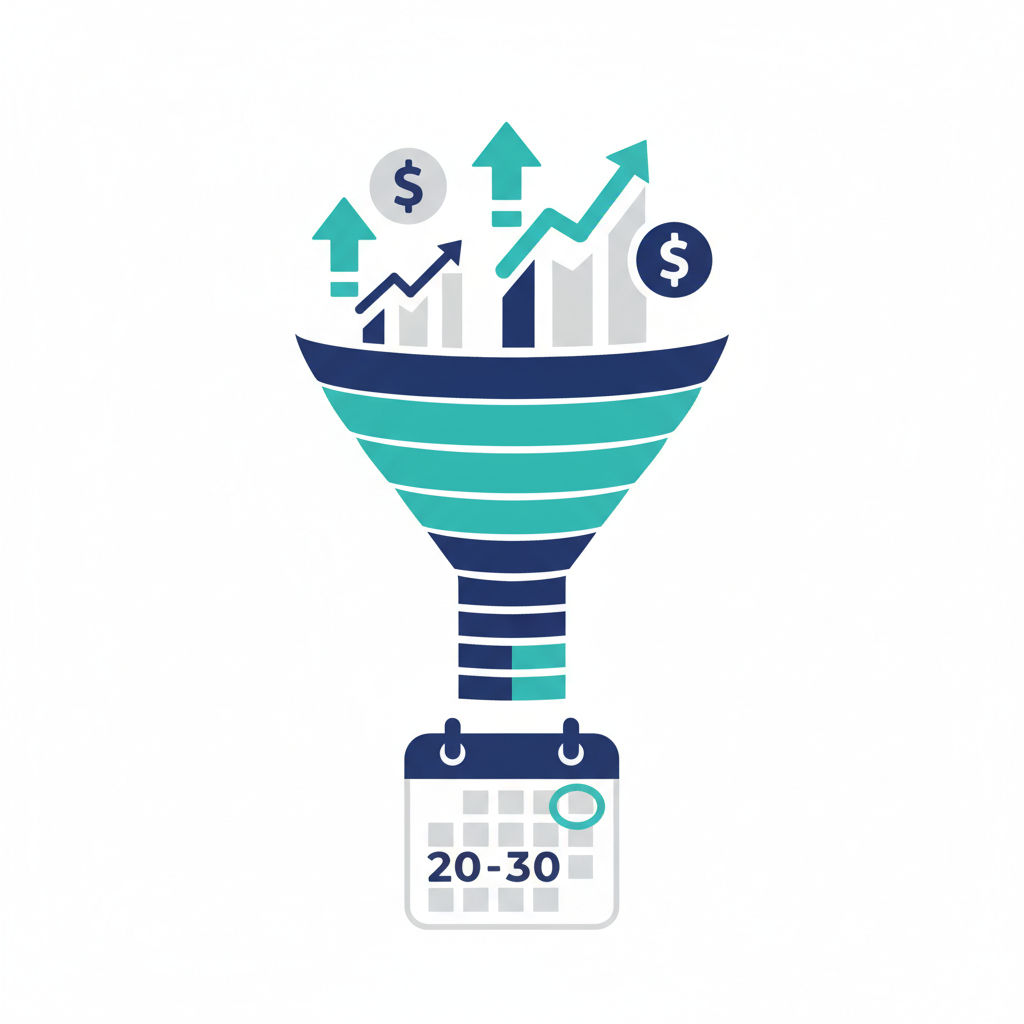
Hiring intent signals are AI-analysed market signals, including funding rounds, headcount growth, leadership changes, and technology adoption, that predict future hiring need before job postings appear. Platforms like Recruit Signals translate these signals into a ranked list of companies most likely to hire in the next 20 to 30 days. That predictive window is where the real BD advantage sits. Agencies already using this approach are winning clients before roles are even posted.

How to Structure Your BD Time in a Stabilising Market
Time allocation is where most agencies get it wrong. They spend the majority of BD hours chasing new logos through cold outbound, when their fastest revenue growth comes from existing relationships. Augtal's 2025 analysis of 40-plus boutique recruiting agencies found that agencies allocating roughly 60% of BD hours to account expansion and 40% to new logo acquisition are more likely to exceed £150K in monthly revenue than those focused predominantly on cold outbound for new clients.
Account expansion means proactively identifying when existing clients are about to hire again. This requires monitoring the same signals you use for new business: funding announcements, executive hires, team restructures, and technology roll-outs. A client you placed with six months ago who just hired a new VP of Engineering is almost certainly building a team. Spotting that before they call you is better BD than any cold email sequence.
For new logo acquisition, the 40% of time you allocate must be high-precision. Research manually on a list of 200 cold prospects and you waste the majority of your effort on companies not currently entering a hiring window. Predictive intelligence narrows that list to the companies worth contacting this week.
The Cadence That Actually Converts
Volume-only outreach, sending the same message to every company on a list, is the most common BD mistake in a stabilising market. It generates low reply rates and, more importantly, trains prospects to ignore you. Intent-led cadences perform measurably better. Agencies that build their BD around live market signals rather than static prospecting see a substantial uplift in conversion from first touch to qualified BD conversations compared with list-based, volume-only outreach.
An intent-led cadence works like this. You identify a company entering its predictive window. Your first message references the specific signal that triggered your outreach (a funding round, a new leadership hire, an office expansion). You connect the signal to a concrete hiring implication in their sector. You ask a specific question. You do not mention your terms until the second or third contact. The reply rate difference is not marginal; it is structural.
Measuring what works is equally important. Track reply rate and meeting-booked rate by sequence, by signal type, and by sector. If funding-triggered outreach converts better than leadership-change outreach in your vertical, you now know where to concentrate your predictive intelligence budget. Without that measurement, you are optimising by instinct rather than evidence.
What a Stabilising Market Actually Rewards
A stabilising market does not reward the agencies that shout loudest. It rewards the agencies with the tightest signal-to-outreach discipline, the clearest sector expertise, and the longest client relationships. These are structural advantages that take time to build but are almost impossible for a competitor to replicate quickly.
The agencies that will struggle are those waiting for the market to return to 2021 vacancy volumes before updating their BD model. That wait is a competitive choice. Every month spent on reactive BD is a month competitors spend identifying hiring intent early, building relationships before roles are posted, and winning the conversations that never appear on a job board.
Frequently Asked Questions
What is a stabilising recruitment market and how does it differ from a candidate-short market?
A stabilising market is characterised by lower vacancy volumes, longer client decision cycles, and reduced urgency to fill roles quickly. Unlike a candidate-short market where hiring managers move fast to secure talent, a stabilising market shifts power back towards employers. Agencies must proactively identify hiring intent rather than wait for urgent vacancy briefs to arrive.
How do hiring intent signals differ from job board alerts for recruitment agency BD?
Job board alerts notify agencies when a vacancy is already live and publicly visible. Hiring intent signals, by contrast, identify companies likely to hire based on pre-posting indicators such as funding announcements, leadership changes, and headcount growth. The practical difference is a 20 to 30 day predictive window where the agency can build a relationship before competitors even know an opportunity exists.
What BD metrics should a recruitment agency track in a stabilising market?
The most useful metrics are reply rate by outreach sequence, meeting-booked rate per signal type, account expansion revenue versus new logo revenue, and pipeline value generated per BD hour spent. Tracking these by signal type and sector reveals which triggers convert best in your specific vertical, allowing you to concentrate effort on the highest-return activities rather than spreading outreach evenly.
How much of a recruitment agency's BD time should go to existing clients versus new prospects?
Augtal's 2025 analysis of 40-plus boutique recruiting agencies found that a 60/40 split, with 60% on account expansion and 40% on new logo acquisition, was most strongly correlated with exceeding £150K monthly revenue. This ratio reflects the fact that warm relationships convert faster and at lower BD cost than cold outbound, particularly in a market where decision cycles are lengthening.
Why does personalised, signal-triggered outreach outperform list-based cold outreach?
Signal-triggered outreach references a specific, timely event relevant to the prospect's business, which demonstrates sector knowledge and creates an immediate reason to respond. List-based cold outreach lacks this context and is indistinguishable from generic sales contact.
When is the right time to move from a reactive to a predictive BD model?
The right time is before your pipeline shows the problem, not after. Most agencies recognise reactive BD is underperforming when close rates drop and outreach volume has to increase just to maintain the same number of meetings. Transitioning to predictive BD during a stabilising market, rather than a downturn, gives agencies time to build new habits and measurement systems without revenue pressure forcing rushed decisions.
A stabilising market is not a reason to pause BD. It is a reason to redirect it. The agencies that come out ahead will be the ones who stopped reacting to job postings and started identifying hiring intent before anyone else. Recruit Signals exists precisely for that gap, identifying companies entering their hiring window 20 to 30 days before they post, so that the first call is a conversation, not a competition.


