Warm BD Calls: Use Hiring Signals to Win More Clients
Hiring signals help identify when companies are actively recruiting, replacing guesswork with real context to drive new logos through targeted BD outreach.

Hiring signals are the difference between a warm business development (BD) call and a cold one. If you are picking up the phone without knowing why a company is likely to be hiring right now, you are not making a warm call at all: you are guessing out loud. The problem is not effort. According to Augtal's analysis of 40+ small recruiting agencies, most agencies waste 60% of their BD time chasing new logos, when the highest-converting outreach comes from calls made with genuine context about a prospect's current situation.
This article covers what to say on a warm BD call, how to structure the conversation, and how hiring signals determine when to pick up the phone in the first place.

Why Hiring Signals Must Come Before the Script
Hiring signals are AI-analysed market indicators, including funding rounds, leadership changes, headcount growth, and product launches, that predict a company's likely recruitment need before any job postings appear. They are the foundation of a warm BD call because they replace assumption with evidence. Without them, your opening line has no anchor. With them, your first sentence can reference something specific the prospect is actually experiencing.
The MitchelLake Talent Market Index, which monitors over 157,000 companies, found across regression analysis of its last 1,000 client engagements that discernible market signals preceded a first engagement with a new client in 70% of cases, by 60 to 80 days on average. The strongest leading signals were geographic expansion, capital raises, and leadership changes. That is not a coincidence: these are the moments when companies begin forming hiring plans, not posting jobs.
The practical implication for your BD calls is direct. You do not need to guess whether a company might be hiring. If you know they just closed a funding round or brought in a new VP of Sales, you have a reason to call that the prospect will recognise as legitimate. That recognition is what separates a warm call from an unwelcome interruption.
What to Say: Structuring a Call Around Hiring Signals
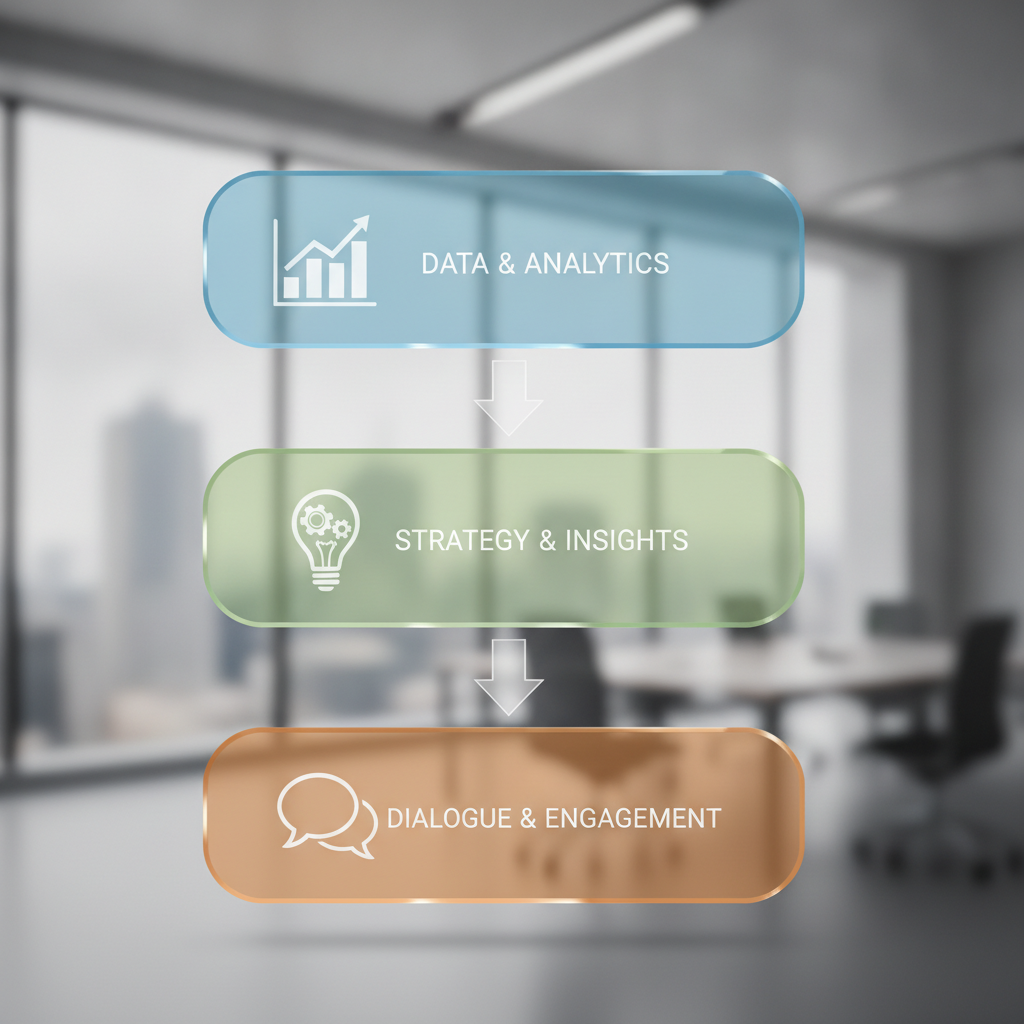
A warm BD call structured around hiring signals follows three steps: the signal reference, the hypothesis, and the open question. None of these steps is a pitch. The goal of the first call is to earn a second one.
Step one: the signal reference
Open with the specific event you have observed. Keep it factual and brief. "I saw you closed a Series B last week" or "I noticed you've brought in a new Head of Engineering" are enough. You are not flattering them or performing research theatre. You are showing that your call has a specific reason behind it. Sector-first messaging and outreach that references a specific company situation consistently generates more replies than generic capability pitches, because the prospect immediately sees themselves in the opening sentence.
Step two: the hypothesis
Follow the signal reference with a single, specific hypothesis about what that event probably means for their hiring. "I'm guessing you'll be scaling the commercial team over the next couple of quarters" or "That kind of leadership change usually means a review of the team structure underneath." You are demonstrating sector knowledge, not just research skills. The hypothesis does not need to be correct. Its purpose is to invite the prospect to tell you what is actually happening, which they will do if the hypothesis is close enough to be credible.
Step three: the open question
Ask one question, and make it about their world, not your services. "Is hiring a priority for you right now, or is it still being scoped out?" works well because it gives them two legitimate answers and signals that you understand hiring decisions take time. Augtal's BD data shows that trigger-based outreach of this kind produces a 63% conversion rate on expansion conversations, compared to 8% for cold new business outreach. The difference is entirely explained by context: one call has it, the other does not.

When to Call: The Predictive Window and Signal Timing
The predictive window is the 20-30 day period before a company begins actively recruiting, when hiring plans are forming but no job postings have appeared. This is the optimal moment for a warm BD call: the company has a genuine need emerging, no agency has the brief yet, and your call lands before the competition even knows the opportunity exists.
Calling too early, before a clear signal has fired, means the conversation has no anchor. Calling too late, after job postings appear, means you are competing with every other agency that monitors the same boards. Contacting hiring managers 30 days before job ads appear is where first-mover advantage is built, and hiring signals are the only reliable way to identify that window.
Platforms like Recruit Signals translate these signals into a Heat Score, a ranked list of companies most likely to need recruitment services in the next 20-30 days. Rather than deciding which prospects to call based on gut feel or the last company you happened to research, your BD team works from a prioritised list built on concurrent signals: funding, leadership movement, headcount trajectory, and product activity. The call you make on Monday morning has a reason behind it before you dial.
The timing discipline matters as much as the script. Top-performing recruitment agencies structure outreach as a system with defined cadences, not as an activity triggered by quiet desks. A 22-day outreach sequence beginning with a signal-referenced LinkedIn message and moving to a phone call around day 12 gives you multiple touchpoints, each of which can be personalised as new hiring signals emerge for that prospect.
Hiring Signals and Account Expansion: The Overlooked Opportunity
Hiring signals are not only for new business development. They are the most reliable trigger for expansion conversations with existing clients. A client you placed six months ago who just announced a new market entry is almost certainly building out a team. The warm BD call in that context is shorter, higher-converting, and built on an existing relationship.
Augtal's BD economics make the case clearly. Account expansion generates an effective hourly BD rate of $4,000 per hour versus $544 per hour for cold new business outreach. The conversion rate on expansion conversations is 47% compared to 8% for new logos. The average deal size is larger too: $24,000 versus $18,500. Agencies consistently hitting $150K or more in monthly revenue allocate 60% of their BD time to account expansion, not new business, and hiring signals are what tell them when to act.
The practical workflow is straightforward. Review your placed clients weekly against a signal feed. When a trigger fires, including a funding announcement, a leadership hire, or a product launch, reach out within 48 hours. According to Aibuildrs' research citing HubSpot's sales data, 65% of companies identify referrals as their primary source of new business, and warm calls to existing clients sit in the same high-trust category. You already have permission. The signal gives you the moment.
For a deeper look at reactivating clients who have gone quiet, the approach to reactivating dormant clients using behavioural signals applies the same logic: a signal-led reason to call is always more effective than a generic check-in.
What Stops Warm Calls from Working
Three patterns reliably undermine warm BD calls, even when the signal intelligence is good.
Pitching too early is the most common. The first call is not for presenting your agency. It is for confirming that the signal you observed reflects a real hiring need and understanding what that need actually looks like. Recruitment BD guidance from Kondo is consistent on this point: lead with value and market insight, not with "do you have any roles?" Pitching too early collapses the conversation into a transactional exchange the prospect was not ready for.
Ignoring qualification is the second failure. Not every warm signal means a company is ready to engage an agency. Some are planning, some are exploring internal options, and some are in budget conversations. A structured qualification framework confirms whether a prospect has budget authority, a live need, and a realistic timeline before you invest further BD time. A prospect who is hiring now but locked into a PSL is worth less attention than one with open supplier access and an immediate need. Treating every warm lead equally dilutes the advantage that hiring signals create.
Persisting past the right stopping point is the third. Augtal's data shows that persistence past three touches drops your effective hourly BD rate below $200 per hour. When a prospect has not engaged after three personalised, signal-led touchpoints, the signal may not have been strong enough, the timing may be off, or they are genuinely not in the market. Moving on and returning when the next signal fires is more productive than a fourth attempt with diminishing returns.
The goal of a warm BD call is not to close on the first conversation. It is to establish that you called with a specific reason, that you understand their world, and that you are worth speaking to when the hiring decision crystallises. Signal-led BD outperforms cold outreach precisely because it compresses the time between first contact and a genuine conversation. Hiring signals do not guarantee a mandate: they guarantee you have something real to say when you dial.
Frequently Asked Questions
What are hiring signals and how do they apply to BD calls?
Hiring signals are AI-analysed market indicators, including funding rounds, leadership changes, headcount growth, and product launches, that predict a company's likely recruitment need before job postings appear. In a BD call context, they give the recruiter a specific, verifiable reason to contact a prospect, replacing generic outreach with a call anchored to something the company is actually experiencing. This context is what makes a call warm rather than cold.
How many days before a job is posted can hiring signals predict a company's need?
The predictive window is typically 20-30 days before active recruitment begins. MitchelLake's regression analysis across 1,000 client engagements found that discernible market signals preceded a first engagement with a new client in 70% of cases, by 60 to 80 days on average. The strongest signals were geographic expansion, capital raises, and leadership changes, which tend to precede formal hiring decisions by weeks.
What is the best opening line for a warm BD call to a funded company?
Lead with the specific event, state a hypothesis about what it means for their hiring, and then ask a single open question. For example: "I saw you closed a Series B last week. My guess is you're planning to scale the engineering team. Is that still being scoped out, or is it already a priority?" This structure shows sector knowledge, invites correction, and avoids pitching before you have confirmed the need exists.
How often should recruitment agencies call warm prospects who have not yet responded?
Three signal-led touchpoints is the practical threshold before pausing outreach. Beyond three attempts, Augtal's BD data shows the effective hourly return drops below $200 per hour, which makes continued effort less productive than monitoring for a new signal and re-engaging when conditions change. Each touchpoint should use a different channel and reference updated context, not repeat the original message.
Should hiring signals be used only for new business or also for account expansion?
Hiring signals are equally valuable for account expansion, where the BD economics are substantially stronger. Augtal's data from 40+ agencies shows account expansion generates a 47% conversion rate and an effective hourly rate of $4,000, compared to 8% and $544 for cold new business. Monitoring existing clients for signals like leadership changes or funding announcements and calling within 48 hours of a trigger fires is one of the highest-return BD activities available to a recruitment agency.
Which hiring signals are the strongest predictors of imminent recruitment need?
Geographic expansion, capital raises, and leadership changes are consistently the strongest leading signals, as identified by MitchelLake across its 1,000-engagement dataset. A newly appointed VP of Sales, a Series A or B close, or a market entry announcement each creates predictable downstream hiring need in specific functions. Product launch signals also carry strong predictive weight, particularly in technology and software sectors.
How do small recruitment agencies compete with larger firms using hiring signals?
Hiring signals level the competitive field by giving small agencies the same early intelligence that large firms with dedicated research teams try to generate manually. A 5-10 person agency monitoring a prioritised list of companies via a platform like Recruit Signals can consistently reach prospects before competitors, because first-mover advantage comes from timing, not team size. Prioritising the right signals and acting within the 20-30 day predictive window is what determines who gets the brief, not who has the most BD headcount.


