Win Medical Recruitment by Reaching Clients Earlier
Healthcare recruiters miss mandates when competitors reach clients after job postings go live. Recruit Signals identifies hiring intent 20-30 days earlier.

Healthcare recruiting is, right now, one of the most commercially valuable sectors any agency can target. The demand signals are structural, not cyclical. According to data from CCI Training's 2026 healthcare workforce guide, the US healthcare industry is tracking nearly 2 million job openings annually through 2034. The UK and European picture is similarly pressured. For recruitment agencies that can read the signals early, that sustained demand translates directly into a long, predictable pipeline of client conversations.
The problem most agencies face is timing. They discover a healthcare client's hiring need when the job posting goes live. By then, three competitors have already made the call. The agencies winning healthcare mandates in 2026 are those reaching decision-makers 20 to 30 days before the role is advertised, while hiring intent signals are still forming.

Why Healthcare Recruiting Demand Is Structurally Different
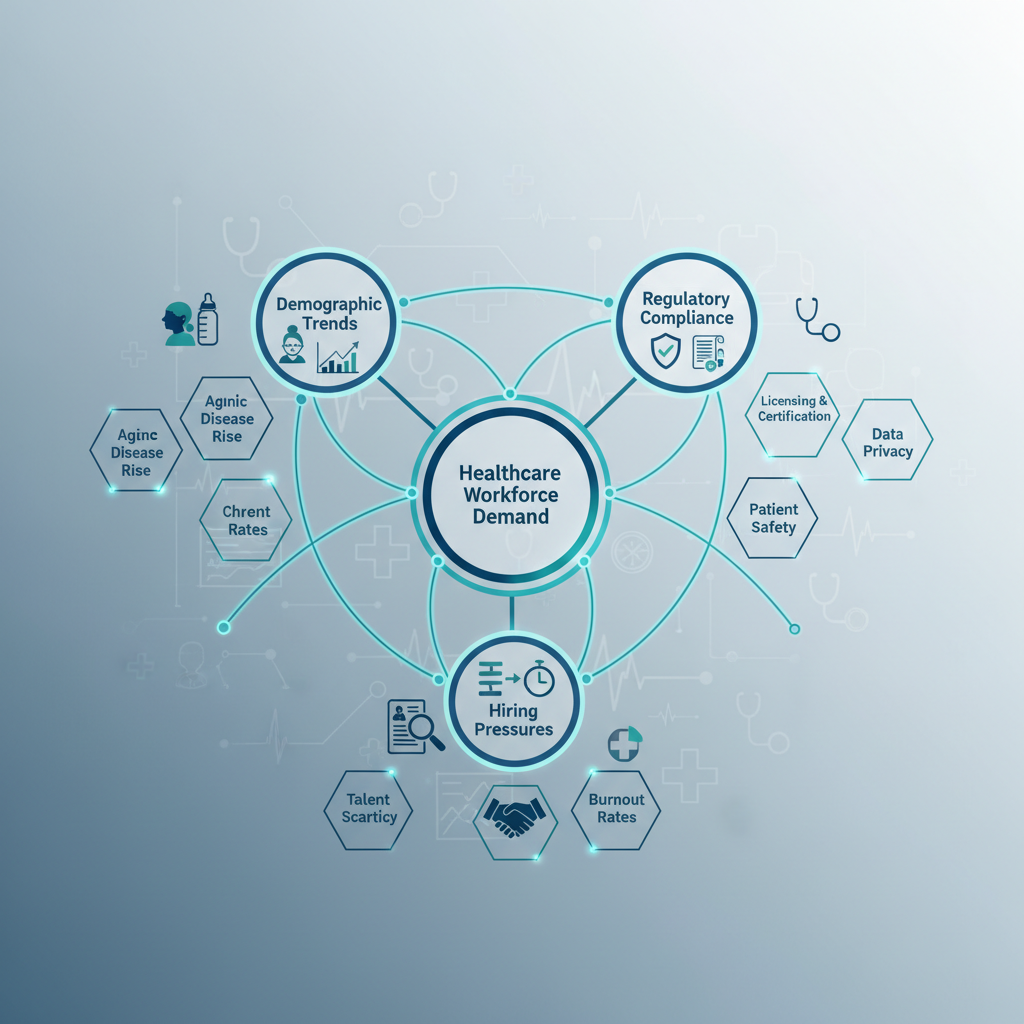
Healthcare recruiting is not driven by sentiment or investment cycles the way technology hiring is. The pressures are demographic and regulatory, which makes them more predictable and more durable. The World Health Organisation estimates a global shortage of 10 million healthcare workers by 2030, a number that puts sustained hiring pressure on health systems for the rest of the decade.
Regulatory pressure is amplifying that demand. In 2025, the Joint Commission overhauled its accreditation standards through what it called Accreditation 360, adding a staffing component to its Hospital National Performance Goals. As StaffDNA's 2026 healthcare staffing analysis explains, hospitals must now provide documentation showing how each department is properly staffed. Accreditation now depends on it. That compliance pressure converts directly into recruitment mandates, particularly for per diem and specialist roles.
For agencies doing healthcare recruiting, this matters because accreditation deadlines and compliance reviews are observable signals. A hospital approaching a Joint Commission review cycle, or one recently flagged on staffing ratios, is a warm prospect. That kind of intelligence is precisely what separates proactive business development (BD) from cold outreach.
What the Data Shows About Healthcare Recruiting Conditions in 2026
Healthcare recruiting conditions in 2026 are defined by a gap between demand and execution. GoodTime's 2026 Hiring Insights Report, based on data from over 500 talent acquisition leaders, shows that healthcare organisations achieved a lower share of their hiring goals in 2025 than in 2024. Time-to-hire increased. Candidate drop-off persisted. These are not signals of low demand; they are signals of high demand running into strained internal hiring processes.
The non-clinical side tells a sharper story. Robert Half's 2026 non-clinical healthcare hiring data shows that only 7% of non-clinical healthcare leaders reported having the capabilities needed to accomplish their priority projects this year. Meanwhile, 64% plan to increase permanent headcount in the first half of 2026, and 54% plan to increase contract or temporary hiring in the same period. Sixty per cent of those leaders said finding skilled professionals is more challenging than a year ago.
That combination is a clear agency opportunity. When internal teams cannot fill their own pipelines, they turn to external partners. The agencies that have already built relationships with those healthcare leaders before the hiring pain peaks are the ones that win the mandate.

Healthcare Recruiting Signals Worth Watching Right Now
The most reliable hiring intent signals in healthcare recruiting fall into four categories: regulatory events, funding announcements, leadership changes, and compliance risk indicators.
Regulatory events, as noted above, are particularly strong in healthcare. The Joint Commission's Accreditation 360 changes mean that facilities preparing for or responding to accreditation reviews are almost certain to be actively assessing their staffing levels. A nurse executive appointment, which the new standards require, is itself a signal worth tracking. Leadership appointments frequently precede hiring waves by three to five weeks, as new executives audit team structure and identify gaps.
Credential and identity risk is another emerging pressure point. First Advantage's 2026 Global Workforce Trends Report, based on insights from more than 2,100 hiring leaders and 3,200 candidates worldwide, found that 44% of healthcare organisations experienced identity-related issues with candidates, and 79% reported discrepancies in employment verification details. Organisations strengthening their verification processes typically rebuild their hiring infrastructure at the same time, often engaging external agencies to accelerate specialist searches.
Funding signals matter too, though healthcare follows slightly different patterns than technology. NHS trust capital releases, private equity investment into care providers, and new clinical service launches all precede hiring windows. Predictive intelligence platforms like Recruit Signals surface these signals before they appear in job postings, giving BD teams a structured list of organisations entering their hiring window rather than a cold database of names.
How Recruitment Agencies Should Approach Healthcare Recruiting BD
The single biggest mistake agencies make in healthcare recruiting is treating it as a vertical to enter rather than a set of signals to track. Healthcare is not one market. Nursing, non-clinical operations, radiology, pharmacy, and healthcare IT each have different hiring cycles, different compliance pressures, and different decision-maker profiles.
Effective BD in healthcare recruiting starts with signal prioritisation. Rather than building a list of every hospital, trust, or care group in a region, strong BD teams identify which organisations are currently under compliance pressure, which have recently changed senior nursing or operational leadership, and which are expanding service lines. These are the organisations most likely to need external recruitment support in the next 20 to 30 days.
Response rates improve substantially when outreach references the specific pressure the prospect is facing. Signal-driven BD consistently outperforms cold outreach because it replaces generic pitch language with a conversation the prospect recognises as relevant. A healthcare recruiter who opens a call by referencing a recent accreditation change or a new nurse executive appointment is not cold-calling. They are arriving at the right moment with relevant context.
Healthcare recruiting also rewards consistency. Burnout is driving a retention crisis alongside the supply shortage. As the CCI Training guide describes it, 2 in 5 healthcare workers find their current conditions unsustainable. That retention pressure means even healthcare organisations that fill roles quickly are back in the market within months. Agencies that build relationships before the acute need hits are better placed to become the preferred partner across repeat mandates, not just the emergency option.
For agencies focused on building a consistent BD pipeline, healthcare is one of the few sectors where structural demand makes the work of identifying warm prospects genuinely tractable. The signals are there. The question is whether your agency is reading them early enough to matter.
Frequently Asked Questions
Which types of healthcare roles create the most agency recruitment opportunities in 2026?
Non-clinical roles such as patient access, revenue cycle management, and healthcare operations are in acute shortage, with Robert Half's 2026 data showing 64% of non-clinical healthcare leaders planning permanent headcount increases in the first half of the year. Clinical nursing roles are under sustained pressure following new Joint Commission staffing accreditation requirements. Specialist and per diem roles are growing as facilities use flexible staffing to meet compliance ratios without committing to permanent headcount.
How do Joint Commission accreditation changes affect healthcare recruiting demand?
The Joint Commission's Accreditation 360 changes, implemented in 2025, added nurse staffing to its Hospital National Performance Goals. Hospitals must now document how each department maintains proper staffing levels to achieve and maintain accreditation. This creates a direct compliance trigger for hiring activity, particularly in nursing and specialist roles, making accreditation review schedules a useful signal for BD outreach timing.
Why is healthcare recruiting so difficult for agencies to win on cold outreach?
Healthcare hiring managers are under simultaneous pressure from staffing shortages, compliance requirements, and burnout-driven attrition. Generic cold outreach does not address any specific pressure they are currently managing. Agencies that reach decision-makers with relevant context, such as referencing a recent regulatory change or a known staffing gap, convert at significantly higher rates because the conversation starts from a place of recognised relevance rather than interruption.
What hiring intent signals are most reliable for healthcare recruiting BD?
The most actionable signals are regulatory compliance events (accreditation reviews, new staffing standards), senior leadership changes (nurse executive appointments, new operations directors), service line expansions or new facility openings, and funding events such as capital releases or private equity investment in care providers. Each of these reliably precedes active hiring by three to five weeks, placing them squarely within the 20 to 30 day predictive window that gives agencies a first-mover advantage.
How does healthcare recruiting differ from technology sector recruiting for agency BD purposes?
Technology hiring is heavily driven by investment cycles and growth signals such as funding rounds and product launches. Healthcare hiring is driven by regulatory compliance, demographic demand, and workforce attrition, making it more continuous and less dependent on macroeconomic sentiment. This means healthcare recruiting signals are more evenly distributed across the calendar year and less subject to sudden freezes, which makes it a more stable sector for agencies building consistent BD pipelines.
What does credential fraud risk mean for healthcare recruiting agencies in 2026?
With 79% of healthcare organisations reporting discrepancies in employment verification and 44% experiencing identity-related candidate issues (per First Advantage's 2026 Global Workforce Trends Report), healthcare employers are rebuilding their verification and screening infrastructure. This creates an indirect agency opportunity: organisations overhauling their hiring processes often engage specialist recruitment partners who already have vetted candidate pools with validated credentials, reducing the organisation's compliance risk.
How far in advance can an agency identify a healthcare organisation's hiring need before the job is posted?
Reliably identifying healthcare hiring need 20 to 30 days before a role is advertised is achievable when agencies track the right signals: compliance events, leadership changes, and funding announcements. Platforms that aggregate and rank these signals, such as Recruit Signals, translate them into a prioritised outreach list rather than requiring manual research across multiple data sources, which is what makes the 20 to 30 day predictive window practically usable for BD teams.


